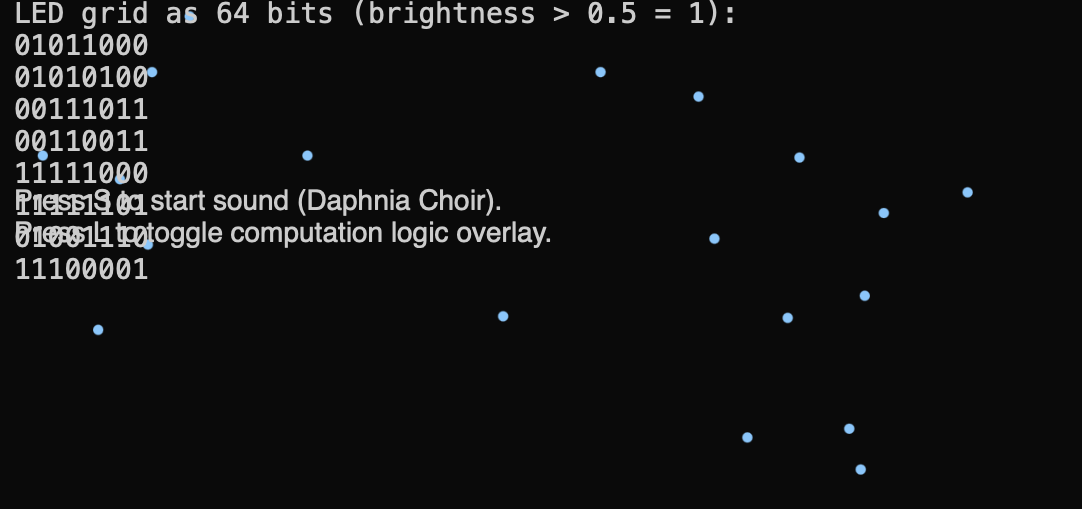
I have found it helpful to think through my pond computer research using AI assited codeing.
In this patch, I created a simulated pond computer. An 8×8 hypothetical sensor grid is imposed over a 2D simulation of daphnia-like particles swimming around. The daphnia are attracted to light. The 8×8 grid represents LDRs and LEDs (though it could use camera tracking in the long run). Each cell adjusts its LED brightness to keep local daphnia density near a target level (trying to simulate a Stafford Beer-style homeostasis). This work in progress is far from perfect, but it has been helpful in my thinking process so far.
INSTRUCTIONS:
First click on the patch and try the vairous keys to change settings. You can view the system in different layers (particles only, LEDs only, sensor grid, or all combined), overlay numeric information per cell, and at any moment press R to take a “pond reading” that converts the current 8×8 LED state into a 64-bit pattern
Use the slider to adjust ammount of daphnia.
// Keys:
// 1 = full view (cells + LEDs + particles)
// 2 = particles only
// 3 = LED brightness only
// 4 = sensor squares only (grey/black, no LEDs, no particles)
// N = toggle numeric overlay (bit + 0–5 density)
// L = toggle computation logic overlay (per-cell + global HUD)
// S = start / enable sound (“Daphnia Choir”)
// R = read latest barcode (bits + numeric value)
