This p5.js sketch turns live earthquake data into an audio-visual replay. It pulls recent earthquake events from the USGS feed, filters them to a chosen geographic region, and compresses that activity into a short looping timeline on screen. As each quake appears in the replay, it is drawn as a pulsing visual marker and also triggers a bell-like tone, creating a shifting map of seismic activity that can be both seen and heard. The code was created with help of AI. The following is an AI generated description of the code functionality: Main functions fetchQuakes() This is the data-loading function. It connects to the selected USGS GeoJSON feed, reads the earthquake records, and converts them into a simpler internal format containing magnitude, place name,
Tag: creative coding
Nodal-vector synth (A false Memory)
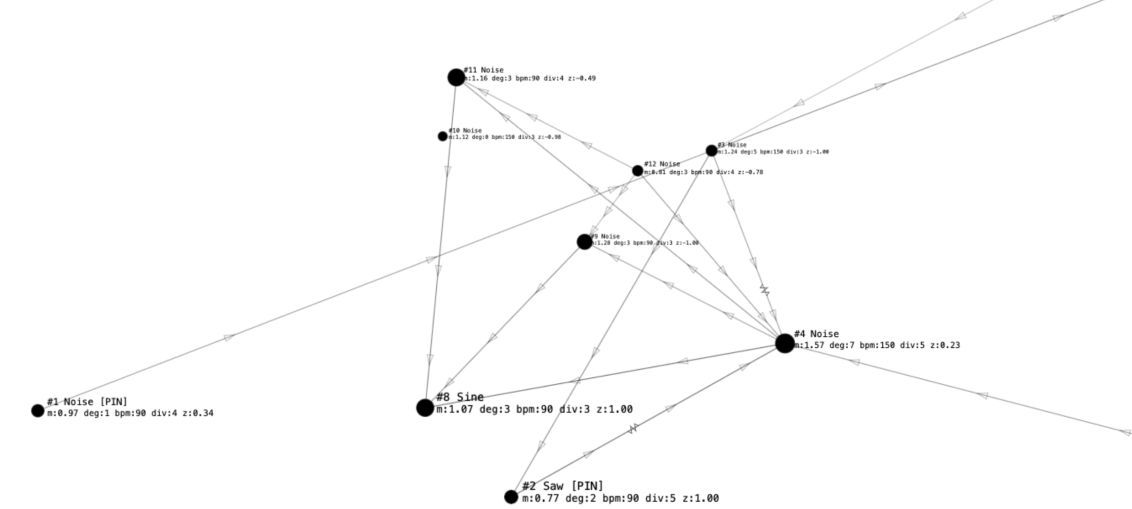
This nodal synth project is based on a false memory. I was discussing false memories with friends last night and reflecting on some of my own. I woke up the next day still thinking about this. I often think about something that my friend Ben had shown me years ago, I have this strong memory of connected objects like a circuit diagram or a mechanical network, and of it running like a program and making sound, and I have a distinct image of it which I am pleased to say I have recreated here, sadly its not sounding as good as i hoped but i am still working on it. At the time Ben was studying music and physics, maybe
CRYPTOGAMIC ORACLE
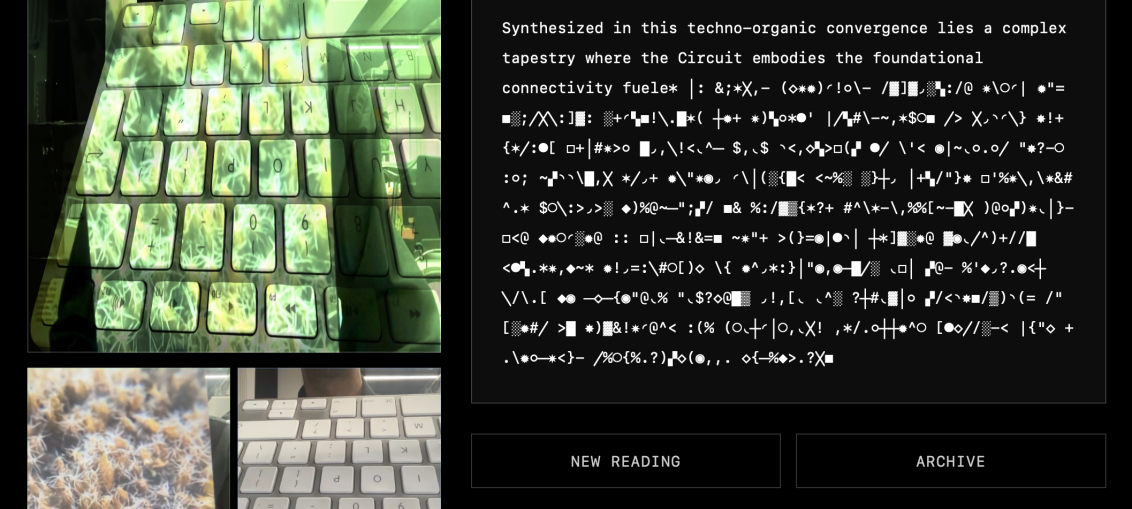
CRYPTOGAMS are organisms that reproduce without seeds or flowers, mosses, lichens, fungi, algae and ferns. They grow in the cracks, on surfaces, beneath notice. Ancient. Persistent. Hidden in plain sight. TECHNOLOGY operates similarly, it permiates the substructures of our cities, embedded in infrastructure, concealed in black boxes, naturalised into landscapes. Cables beneath pavement. Servers in warehouses. Computational substrate invisible until examined. Both are MATERIAL SYSTEMS with hidden processes. Both accumulte memory. Both create networks. The cryptogam and the circuit share a logic: distributed intelligence, environmental sensing, collective survival. Project outline: Cryptogamic Oracle is a 'techno-organic' divination system that reads the hidden materiality between natural and technological systems. Users capture two images: cryptogams (moss, lichen, fungi) found in urban environments, and nearby technology infrastructure.
Pond computer simulation
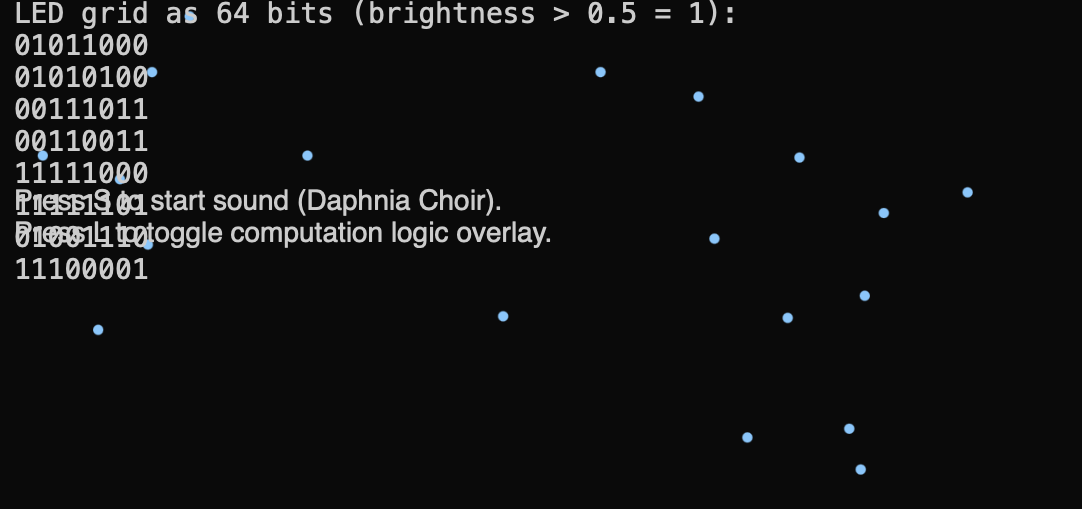
I have found it helpful to think through my pond computer research using AI assited codeing. In this patch, I created a simulated pond computer. An 8×8 hypothetical sensor grid is imposed over a 2D simulation of daphnia-like particles swimming around. The daphnia are attracted to light. The 8×8 grid represents LDRs and LEDs (though it could use camera tracking in the long run). Each cell adjusts its LED brightness to keep local daphnia density near a target level (trying to simulate a Stafford Beer-style homeostasis). This work in progress is far from perfect, but it has been helpful in my thinking process so far. INSTRUCTIONS: First click on the patch and try the vairous keys to change settings. You can view
The Cave
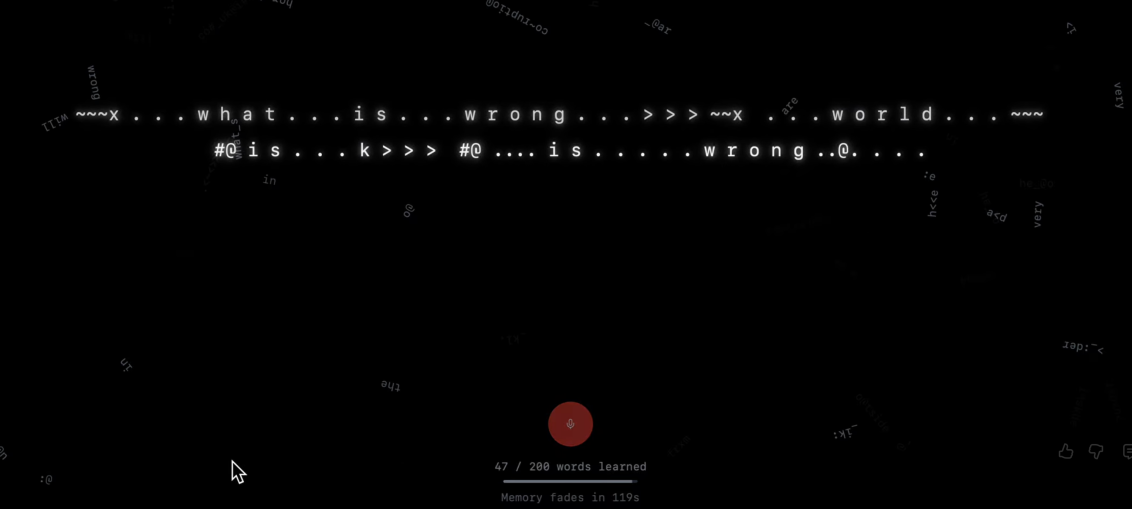
Plato’s Allegory of the Cave offers a metaphor for the limits of human perception. Plato describes a group of prisoners in a cave who know the outside world only through shadows projected on a wall in front of them. Similarly, LLMs don't learn about the world from direct experience, but from “shadows” in its training data: billions of sentences written by people, describing things, events, and our conversations about them. It is trained to predict the next word in those texts, not to build an accurate picture of reality. Jan Kulveit suggested that an LLM is like a ‘blind oracle in yet another cave, who only hears the prisoners conversations about what they see. I thought It would be interesting to simulate a version
Becoming Pond – A statement of intent

On Being Moss Over the past couple of years, I have been focusing on mosses. I learned a lot about moss, but to really understand it, I actually started embodying and reflecting moss-like behaviours in my working practice. I began to become like the moss. Thinking through moss affords a different way of practising and being in the world. I employed a 'methodology of moss' to guide my practice, a set of principles for eco-activist practice that draws parallels between the ecology of moss and eco-arts practice. The power of moss is in its smallness and its slow persistence. It's both interesting and challenging to align these principles with the fast-moving worlds of emerging technologies, new media and AI. Mosses, like artists,
Carbon Cloud Chat

https://carbon-cloud-chat-21c0d88f.base44.app As a thought experiment, I used AI to develop a carbon-aware AI chatbot that actively discourages the use of AI and guides users toward lower-carbon alternatives, or encourages them not to use the AI at all. I have been working on several modules related to UX and sustainability in the digital arts this year, and the ecological impact of AI is a key concern. This is a work in progress, and I will use this app as a point of discussion in my lectures. I am aware of the meta irony here: I used AI (Basse44, with one primary design prompt and 20 further iterations, plus a few hours of testing) to build an AI that advises people not to overuse AI. That
Co Lab Game
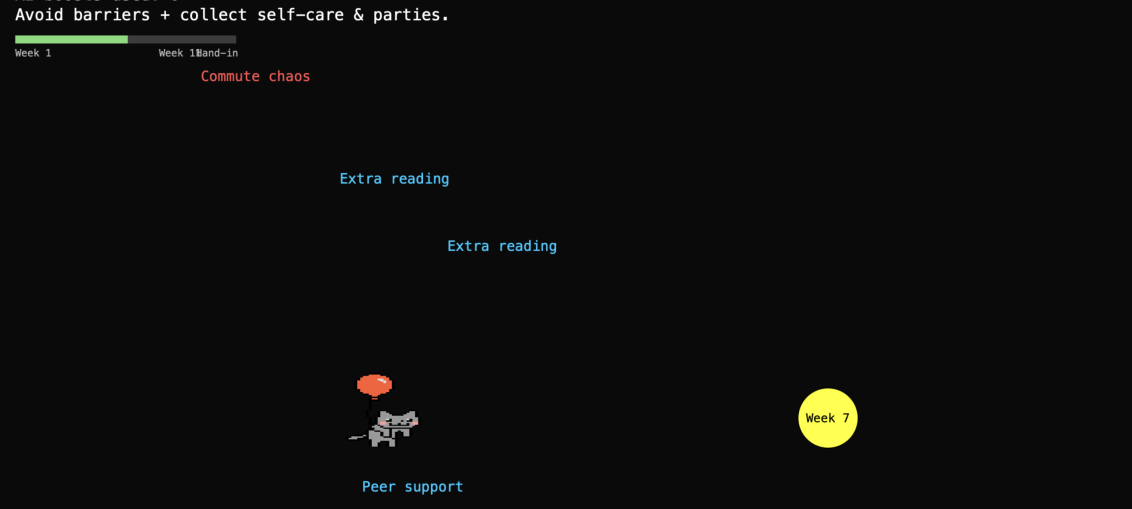
I creted this game using p5js.org for stundets, as a fun way of outlining the benifit of turning up to lessons, doing the work and avoiding over use of AI (However I did create this game with help of AI. This has been an enjoyable process, exploring basic game design through lots of play testing and code tweaks (Aproximatly 5 hours work so far)..
Text scramble effect
Some experiments with P5JS code. https://editor.p5js.org I wanted to create a poster for Dorkbot which had a glitch scramble effect...Alsoi tried to replicate slime mould type visulisations with words..Next step if to make these updateable from a google sheet so we can quickly update the info and presnet full screen for the dorkbot event.
Remember Nature 2025 (with Yu-Chen Wang)
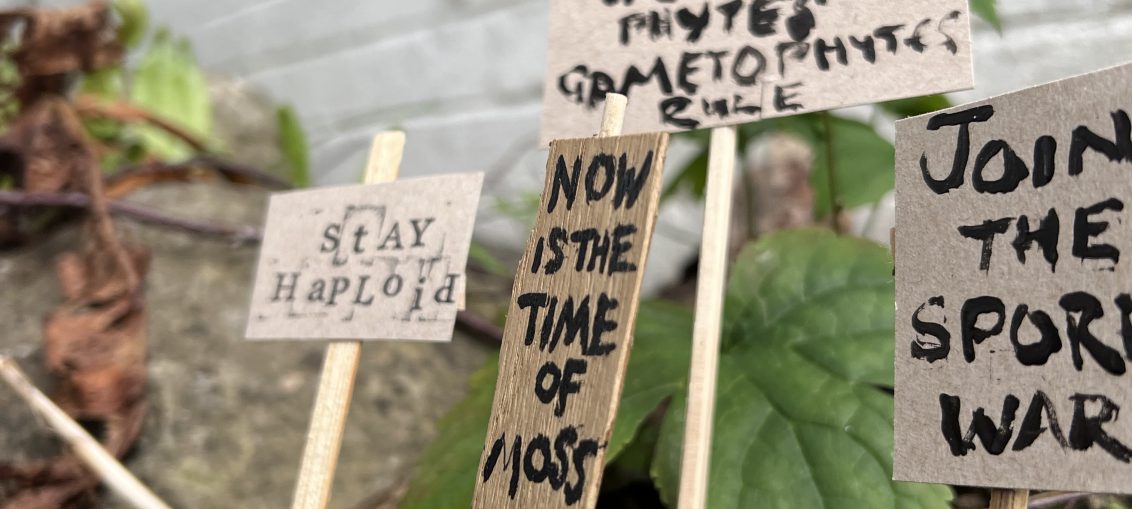
I am taking part in Remember Nature 2025 Here is the information...I will be at hulme GHarden centre making Microprotests (see generator above built in p5js click to re-generate).... A Nationwide Day of Artist‑led Action to Stand Up for Nature NATURE REMEMBERED Communal Walk: 4 November 2025 (12.30–3pm)Meet at Manchester Art Gallery, Derek Jarman Pocket Park, M2 3JL.Tickets (Free) Gathering: 4 November 2025 (3–5pm)Hulme Community Garden Centre, M15 5RG.Tickets (Free)In 2015 artist Gustav Metzger called on art schools and students of all disciplines to “Remember Nature” and “make a stand against the ongoing erasure of species”. Tuesday 4 November 2025 marks a decade since that call, and partners across England are coming together, bringing ethics into aesthetics, for Remember Nature 2025. You can find out more about