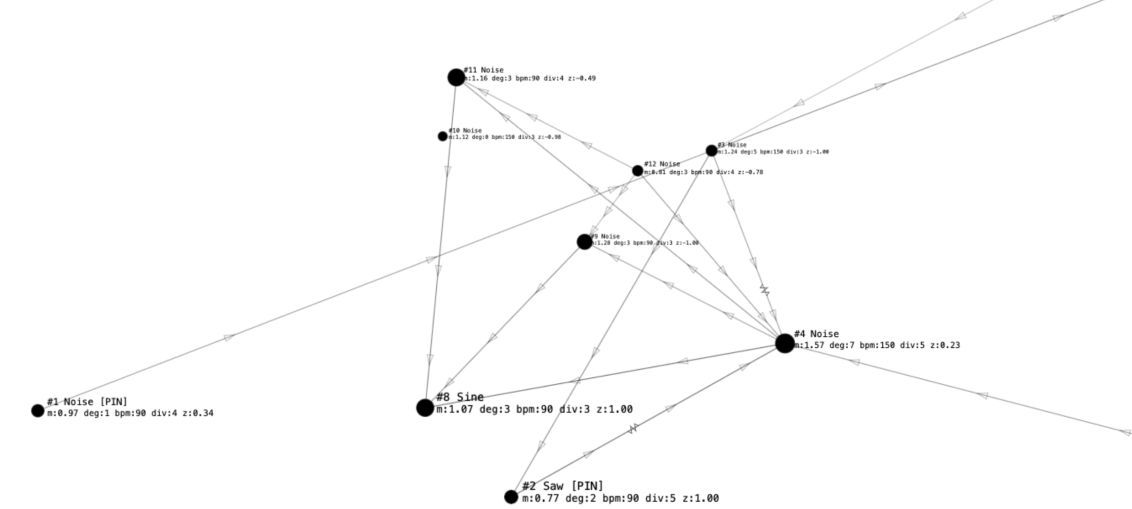
This nodal synth project is based on a false memory. I was discussing false memories with friends last night and reflecting on some of my own. I woke up the next day still thinking about this. I often think about something that my friend Ben had shown me years ago, I have this strong memory of connected objects like a circuit diagram or a mechanical network, and of it running like a program and making sound, and I have a distinct image of it which I am pleased to say I have recreated here, sadly its not sounding as good as i hoped but i am still working on it. At the time Ben was studying music and physics, maybe
Tag: pond-brain
Pond computer simulation
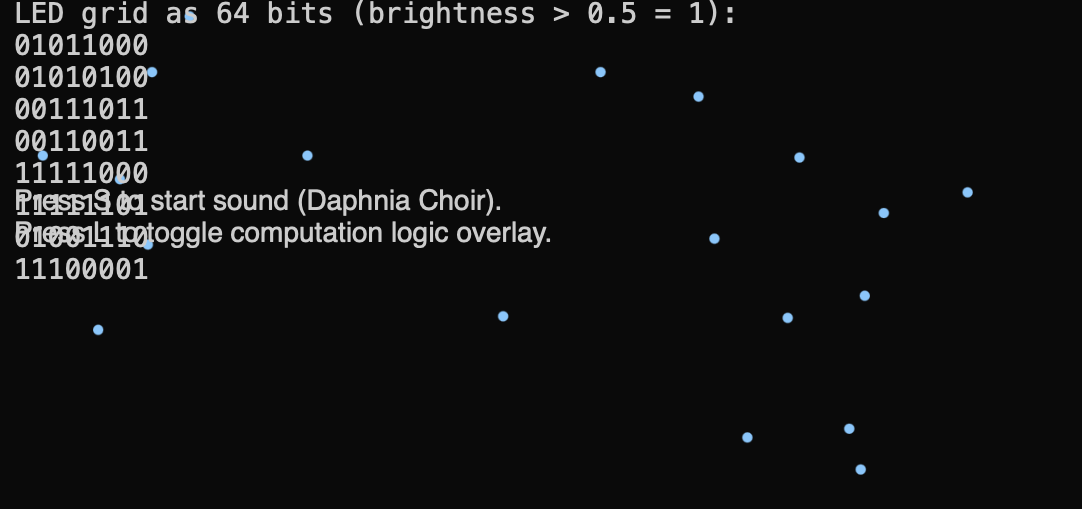
I have found it helpful to think through my pond computer research using AI assited codeing. In this patch, I created a simulated pond computer. An 8×8 hypothetical sensor grid is imposed over a 2D simulation of daphnia-like particles swimming around. The daphnia are attracted to light. The 8×8 grid represents LDRs and LEDs (though it could use camera tracking in the long run). Each cell adjusts its LED brightness to keep local daphnia density near a target level (trying to simulate a Stafford Beer-style homeostasis). This work in progress is far from perfect, but it has been helpful in my thinking process so far. INSTRUCTIONS: First click on the patch and try the vairous keys to change settings. You can view
The Cave
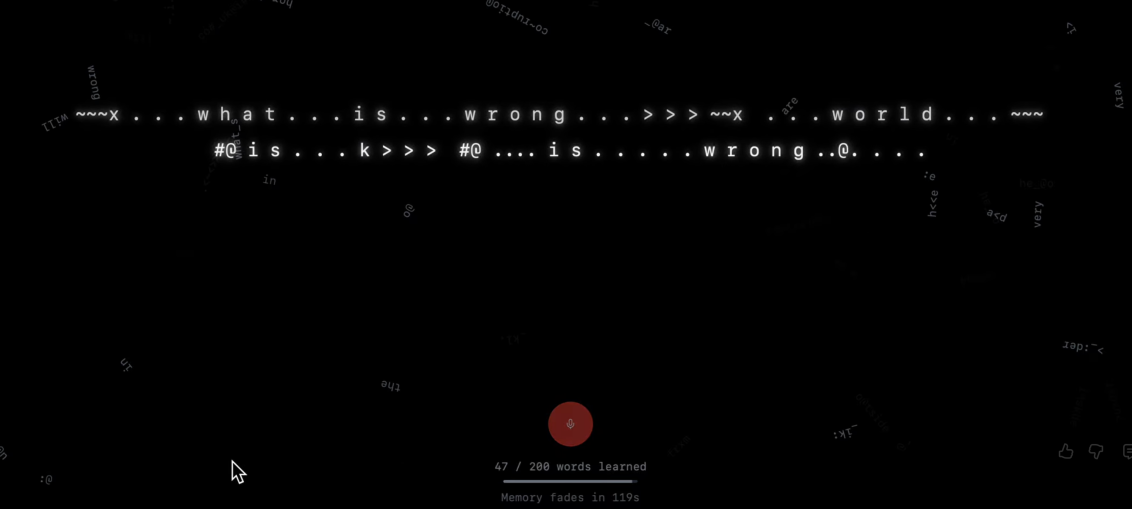
Plato’s Allegory of the Cave offers a metaphor for the limits of human perception. Plato describes a group of prisoners in a cave who know the outside world only through shadows projected on a wall in front of them. Similarly, LLMs don't learn about the world from direct experience, but from “shadows” in its training data: billions of sentences written by people, describing things, events, and our conversations about them. It is trained to predict the next word in those texts, not to build an accurate picture of reality. Jan Kulveit suggested that an LLM is like a ‘blind oracle in yet another cave, who only hears the prisoners conversations about what they see. I thought It would be interesting to simulate a version
Becoming Pond – A statement of intent

On Being Moss Over the past couple of years, I have been focusing on mosses. I learned a lot about moss, but to really understand it, I actually started embodying and reflecting moss-like behaviours in my working practice. I began to become like the moss. Thinking through moss affords a different way of practising and being in the world. I employed a 'methodology of moss' to guide my practice, a set of principles for eco-activist practice that draws parallels between the ecology of moss and eco-arts practice. The power of moss is in its smallness and its slow persistence. It's both interesting and challenging to align these principles with the fast-moving worlds of emerging technologies, new media and AI. Mosses, like artists,